


Southern Baptists pass a ban on women pastors again. This time, they hope it sticks.
Proposed ban passes overwhelmingly in first vote; second vote required in 2027
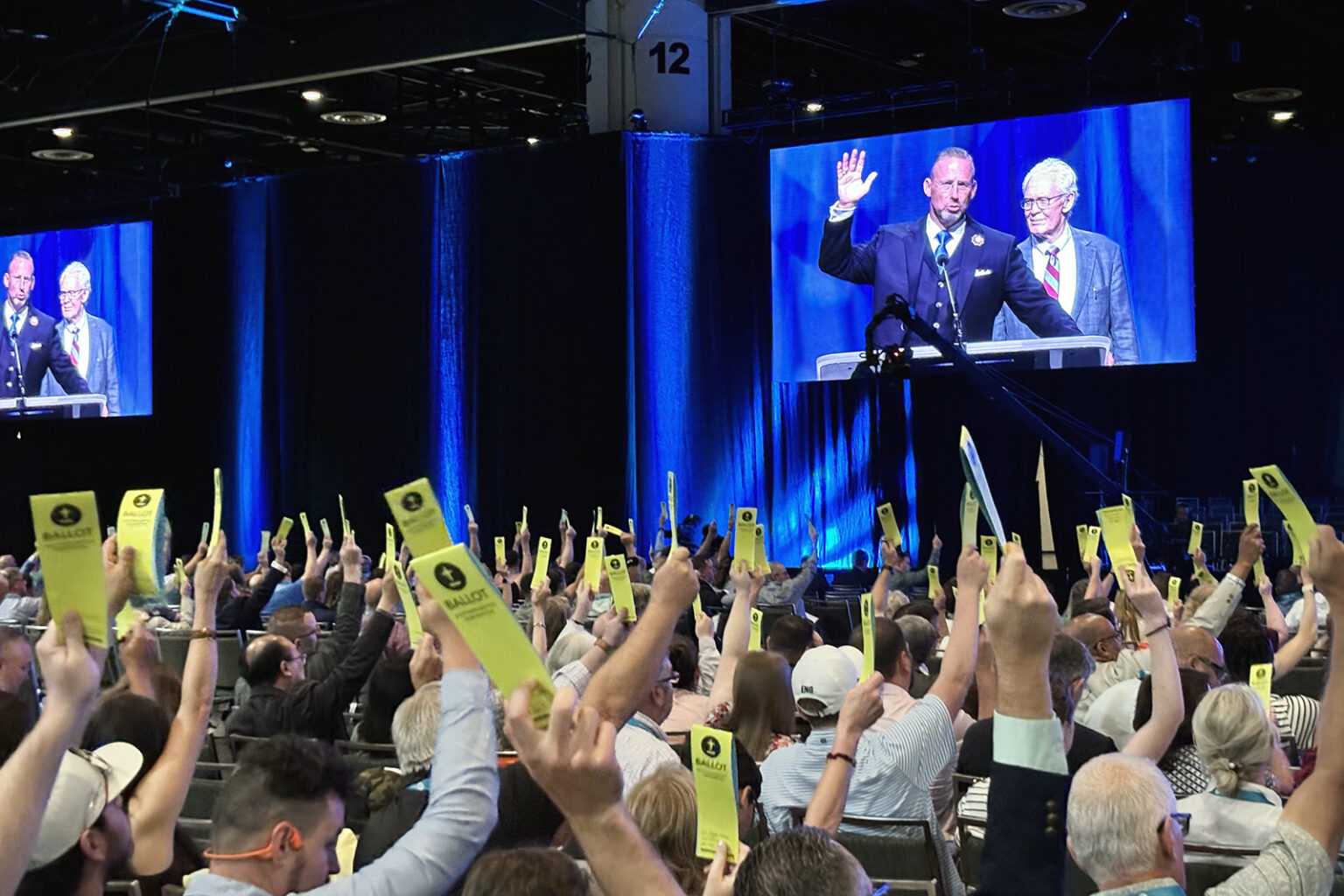
ORLANDO, Fla. (RNS) — A proposal by the nation’s largest Protestant denomination to ban churches that have women pastors or let women preach on Sunday mornings passed overwhelmingly on Wednesday (June 10), marking the first step toward enshrining the ban in the Southern Baptist Convention’s constitution.
Almost three-quarters (74.6%) of local church delegates, known as messengers, voted in favor of the so-called Truth and Unity Amendment during a Wednesday morning session of the SBC’s annual meeting. A quarter (25.09%) voted against the measure.
Under the denomination’s rules, any change to its constitution must be approved by a two-thirds majority in two consecutive years. Two previous attempts to approve the ban had failed.
Al Mohler, president of the Southern Baptist Theological Seminary in Louisville, Kentucky, has said the ban will keep the SBC from getting too liberal.
“There’s a great line that divides liberal and biblical evangelicalism, and you can see it on this very issue,” said Mohler, who wrote and proposed the amendment. “The trajectory of liberal denominations is clear.”
Ahead of the SBC meeting, Baptist Women in Ministry, which provides support and resources for women in ministry, paid for a billboard to go up in Orlando — where the SBC gathering is being held — defending women who teach and preach the Bible.
“Women in ministry deserve affirmation, respect, and the opportunity to follow God’s call,” the group said in a statement after the vote’s results were made public. “We are heartbroken that they have been denied those fundamental freedoms in the process of this vote.”
The SBC’s statement of faith, known as the Baptist Faith and Message, has held since 2000 that only men can be pastors. However, until 2021, the SBC took no national action to expel churches with women pastors.
Then, a couple of social media posts changed everything.
First, Bible teacher Beth Moore, then a Southern Baptist, tweeted about speaking at a church on Mother’s Day in 2019, which set off an online firestorm over the issue of women preachers and pastors. Then, in 2021, Saddleback Church, one of the largest churches in the SBC, ordained several women on staff as pastors.
“Yesterday was a historic night for Saddleback Church in many ways!” read a post on the California megachurch’s Facebook page at the time.
In a press conference, Mohler said that social media has made it possible for Southern Baptists to know what is going on in local churches—especially churches that allow women to preach or have women pastors.
All of a sudden, he said, churches said, “Wait a minute.”
That led to a move in the SBC to expel churches like Saddleback and to change the denomination’s constitution to make clear that similar churches were no longer welcome.
“Saddleback has taken actions that place itself in direct conflict with the stated doctrines of the Southern Baptist Convention,” Mohler told Religion News Service in an interview at the time.
In 2023, Saddleback was expelled from the SBC. It’s one of 10 churches deemed out of “friendly cooperation” – an SBC term for removing churches — over the issue of women pastors, according to the report from the SBC’s credential committee.
Jonathan Sams, chair of the credentials committee, told SBC messengers that over the past seven years, 44 SBC churches were found to have women pastors on staff. Of those, 20 left on their own, while 10 were expelled. The committee gave no details about what happened to the other churches.
Earlier this year, a Texas church changed the titles of some women on staff from pastor to minister.
Some churches have claimed that the rule limiting the pastoral office to men only applied to a church’s senior leader and have given women staff the title of pastor. Other churches have also allowed women to preach during the Sunday services, something that proponents of the amendment say should not be allowed.
Willy Rice, a Florida pastor who won the SBC’s presidential election on Tuesday, blamed what he called “sloppy ecclesiology” and “cultural pragmatism” for misuse of the title “pastor.”
“We started handing out titles indiscriminately, and pastor, you’re a pastor, you’re a pastor, you’re a pastor,” he told a group of SBC pastors on Tuesday. “We lost the meaning of the word ‘pastor.’”
A similar amendment to ban women pastors was first passed by Southern Baptists in 2023 but failed to get a two-thirds majority in 2024. Last year in Dallas, a proposed amendment on the same issue also failed.
In Orlando, the messengers were eager to vote again. They lined up at microphones around the meeting hall, waiting to have their say about the amendment. Several pushed a button to alert outgoing SBC President Clint Pressley that they wanted to speak before the amendment was even up for debate.
Pressley finally warned messengers to let the meeting get on with the business. “Then from there, we’ll open it up for a free-for-all,” Pressley told messengers.
After a brief debate, one of the messengers called for the question, a parliamentary procedure to force a vote. The other messengers agreed and the vote went on.
In other business, messengers approved a $186 million budget for 2026-2027, of which more than half (51%) will go to the SBC’s international mission board. That budget requires cuts from the SBC’s seminaries and other agencies, including $600,000 from the SBC’s Executive Committee.
The most spirited debate came during a discussion of future sites for the SBC meeting, with a number of messengers objecting to planned future meetings in Anaheim, California, which is far from most SBC churches. Abel Galvan, a bivocational pastor from La Palma, California, defended the proposed meetings on the West Coast, which were eventually approved.
“I just want to invite you to come back to California. I know it looks like a mess, but there are many of us who love Jesus there,” he told messengers.
EDITOR'S NOTE: This article was written by Bob Smietana and originally published by Religion News Service.

