


Warren, Hirsch address repentant hearts, missional mindset
How can churches be rooted in the gospel and focused on the Great Commission?
By Carrie Brown McWhorter
TAB Media Group
VIRGINIA BEACH, VA - Virginia Baptists were challenged to “Reimagine the Church” during the Nov. 10 afternoon session of the 2026 BGAV Annual Meeting, which featured messages from two prominent missional leaders who continued to explore the theme “Heart for the Not Yet.”
After a welcome by emcee Fola Ojumu and special music by Taylor Vancil, Grant Frederick, and Alan Miller, BGAV executive director Wayne Faison told messengers that “having a heart for the ‘not yet’ means learning to see people differently.”
“It means trusting that God is already at work, and it means becoming willing to participate in the mission rather than simply admiring the mission,” Faison said. “That might just require us to rethink the way we do church.”
Faison said the session’s speakers, Rick Warren and Alan Hirsch, were chosen to bring “two voices into one conversation” — how churches can be rooted in the gospel and focused on the Great Commission.
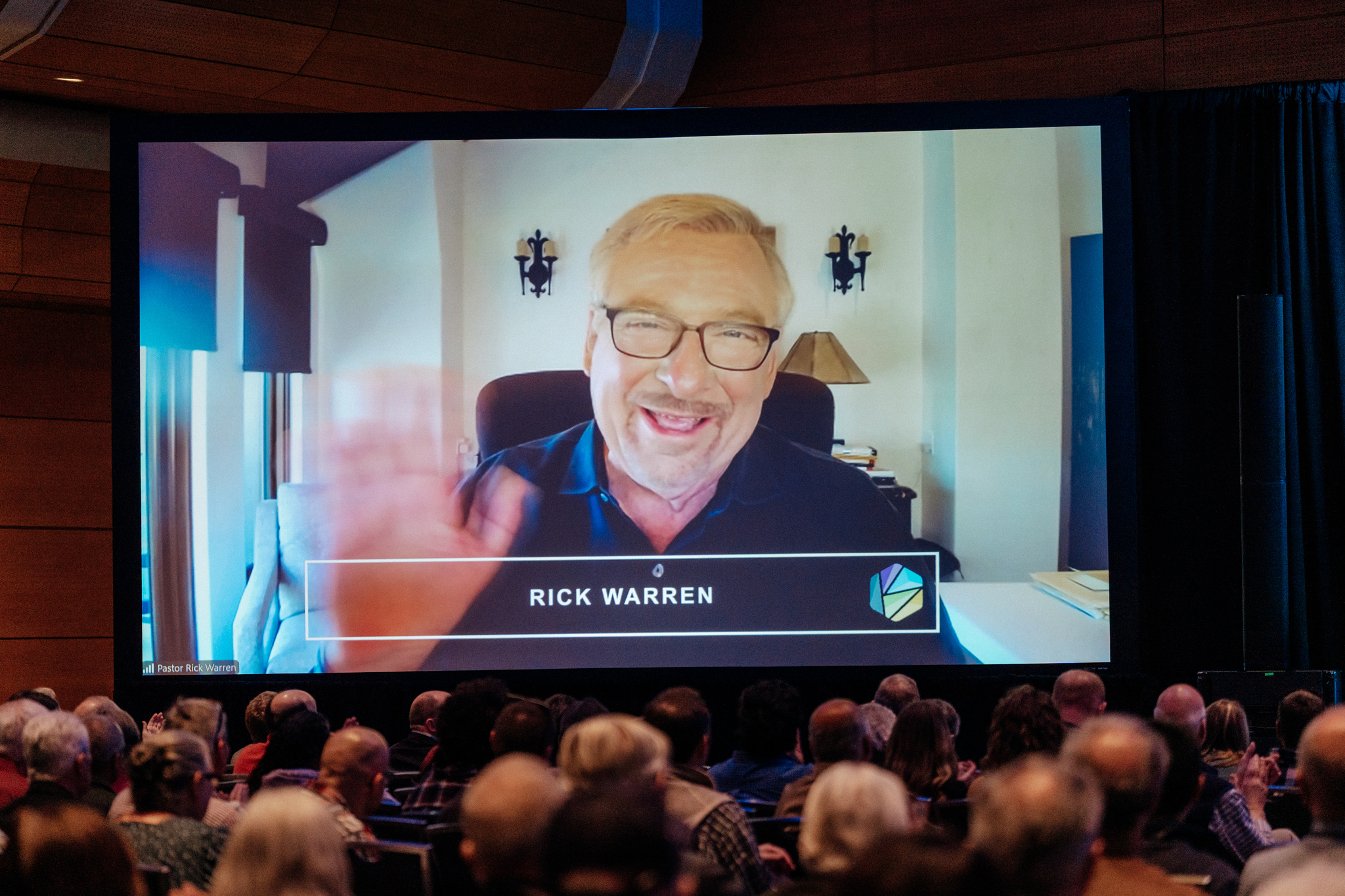
Rick Warren
(Photo by James Lee/Journey Seven Media)
What does God want more than anything else? “He wants His lost children found,” pastor and author Rick Warren told messengers, speaking via a livestreamed message.
“All around the world, Christians of every denomination are working together to finish the task of the Great Commission by the 2000th anniversary of the church,” Warren said. “I invite you to be a part of that.”
Warren, founder of Saddleback Church and several other ministry organizations, is executive director of Finishing the Task, a global movement of denominations, organizations, churches, and individuals working together on the Great Commission goals of ensuring that everyone everywhere has access to a Bible, a believer and a local body of Christ.
He suggested to listeners that part of “finishing the task is re-evangelizing the church.”
Warren said there are “cultural Christians,” “carnal Christians,” “casual Christians,” and “committed Christians.”
“What we have to do is renew the church to reach the world,” he said.
The gospel does not change, but nurturing a heart for the “not yet” may require the church to rethink methods and structures in order to reach the lost, he said.
“We must return to the model of the first church, as seen in the Book of Acts,” Warren said. “I believe with all my heart that the model church in the 21st century is found in the first century.”
A biblical model is a transcultural model, he said: “It will work everywhere.”
Jesus trained his disciples “how to plant a church, how to grow a church, [and] how to disciple others. … The fastest period of growth in the history of Christianity was the first 36 decades. … They didn’t have any of the things we use today: radio, TV, cars, trains, planes, automobiles, internet, social media, AI.”
“How did they grow so fast? Everybody gossiped the gospel.”
People today are caught up in culture wars, Warren said, but God’s Kingdom is not politics or other issues of the day.
“Friends, those people out there that we disagree with, they’re the mission field,” Warren emphasized. “We have a much bigger battle than politics. … Our battle is the Kingdom of God, spreading the good news.”
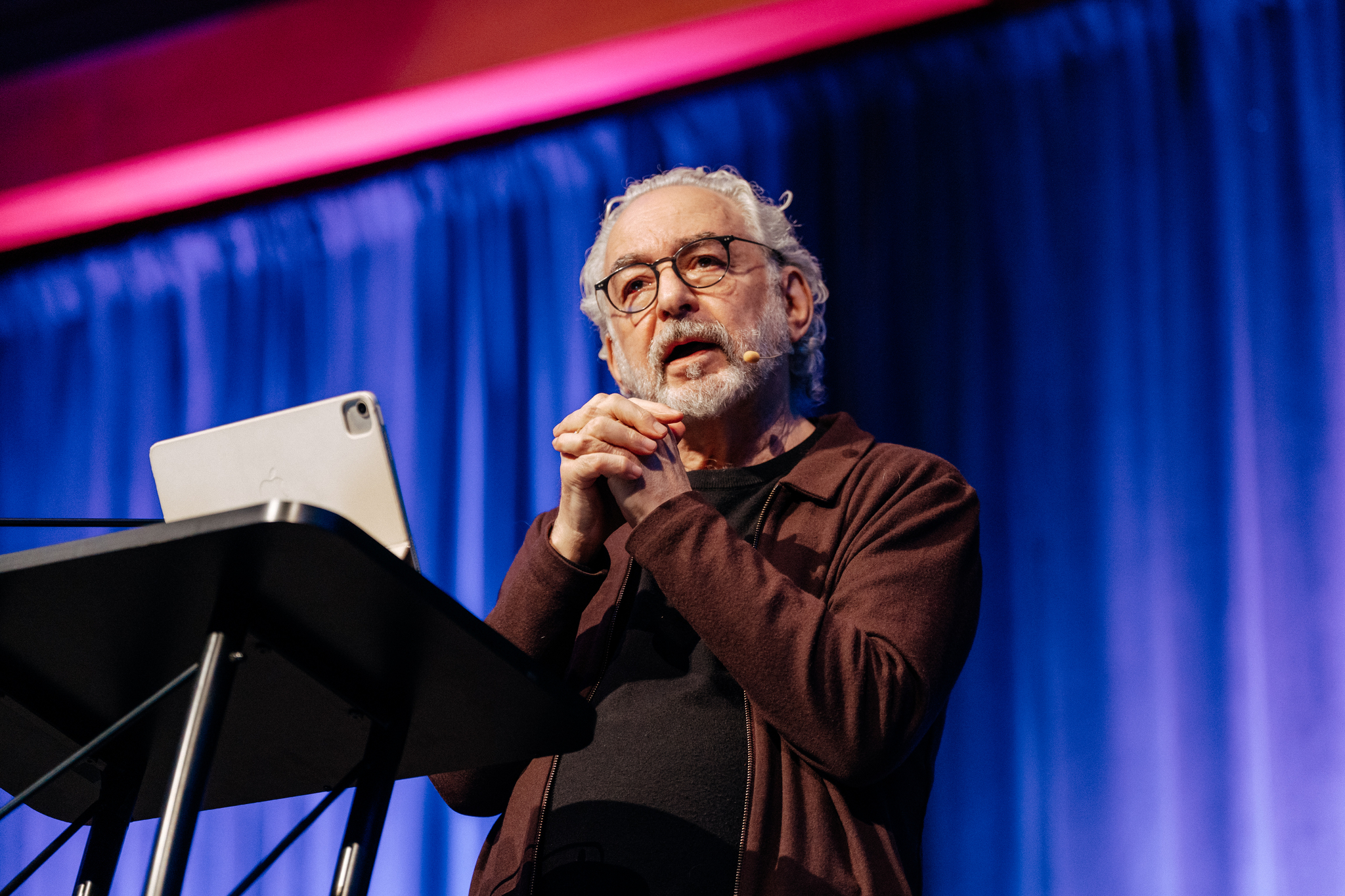
Alan Hirsch
(Photo by James Lee/Journey Seven Media)
Continuing on the theme of “Reimagining the Church,” author Alan Hirsch dove into the topic of repentance, specifically the original idea of “metanoia,” which he defined as “thinking fundamentally differently to the way you’ve been thinking thus far.”
Hirsch, widely considered to be a global thought leader on missional movements and leadership, has worked with churches and organizations around the world in addition to writing numerous books on ministry and leadership. He said we are living in a “fraught kind of cultural moment … [one] that has been called VUCA: volatile, uncertain, chaotic, and ambiguous.”
These characteristics are not just in the world outside the church, however.
“We are living in a time of apocalypse,” he said, noting the biblical meaning of the word is “revelation or exposing.”
“We are becoming aware of things that were there for so long. … It’s like lifting the veil.”
“God is exposing and revealing things in ourselves and in civilization, in patterns of broader culture that we must become aware of,” he said.
But we must not only be aware, he asserted, calling attention to the seven churches named in Revelation.
“If God calls these original churches to metanoia, to repentance, why do we think we get a pass on it? Why do we think we don’t have to do that?”
“We need to experience metanoia because any move towards God, friends, any advance in our experience or our knowledge of Him actually requires it,” Hirsch said.
He compared it to rebooting a computer. “Repentance involving conversation, redirection, and paradigm shift is just like rebooting the system and pushing the reset button.”
When it comes to church methods, structures, and traditions, Hirsch challenged listeners to be willing to “unlearn in order to relearn,” to be willing to let go of things that once worked but may no longer serve their purpose.
He concluded by encouraging those gathered to engage in “collective metanoia,” not just for the sake of change, but so the church might “actually might become the movement that can change the world again.”

